by Dr. Zoe Cormack
Published 30.09.2026
A new dataset – the outcome of a project entitled ‘The Impacts of War and the Survival of Tradition: Documenting Zande slit drums (gugu) in South Sudan’ has recently been published on the data repository of the Endangered Material Knowledge Programme at the British Museum.
This project was led by Zoe Cormack (British Museum) and El-Fatih Maluk Atem (Likikiri Collective) with researchers Samuel Biegene Zanugu and Isaac Waanzi Hilary. It was hosted by the British Institute in Eastern Africa. Research and data collection was carried out in Western Equatoria state of South Sudan between 2021 and 2023.
This project documented the production, uses and cultural significance of the Zande ‘gugu’ (slit drum or gong). These wooden drums, which can stand up to five feet high, are often carved into elaborate zoomorphic designs. They are used in dances, as a means of communication and increasingly in Christian worship. They embody the social centre of many Zande communities. Their production takes several months to complete and requires a hardwood tree and specialist knowledge of several traditional carving implements, which are used to create the characteristic two-toned ‘voice’ of the drum. Its production is deeply rooted in the landscape and history of Zande people. However, knowledge of gugu production is dwindling, and transmission of this knowledge has been threatened by prolonged civil wars and extensive displacement.
The project followed the creation of a gugu from the beginning to end, capturing the knowledge of a master carver, Elia Magas Mboriundo Maingbarungo. The team also documented current use and recorded oral history interviews about the gugu with Zande elders. Despite the extremely disrupted circumstances in South Sudan, the gugu survives, albeit in a critically endangered form. Therefore, this project also interrogated how material knowledge, such as that embodied in the gugu, can endure through periods of conflict and long-term displacement.
All of the documentation from this project – showing different stages of making the gugu, interviews with knowledge holders and photographs of current practice – can be found on the project repository.
The Endangered Material Knowledge Programme gives grants to support the documentation of material knowledge systems that are under threat and in danger of disappearing. It also provides free access by stewarding that knowledge in an open-access digital repository dedicated to its preservation.
Knowledge holders, practitioners, and scholars can apply for funds to support work that explores knowledge systems associated with the making, use, repair and re-purposing of material objects, spaces, architecture, performances and environments. EMKP strongly advocates for a working approach that centres on community epistemologies, close collaborative working and celebration of the diverse knowledge networks that affect the material world.
A call for new project applications is open until 1 December 2026.

Zande slit-drum (gugu) in South Sudan
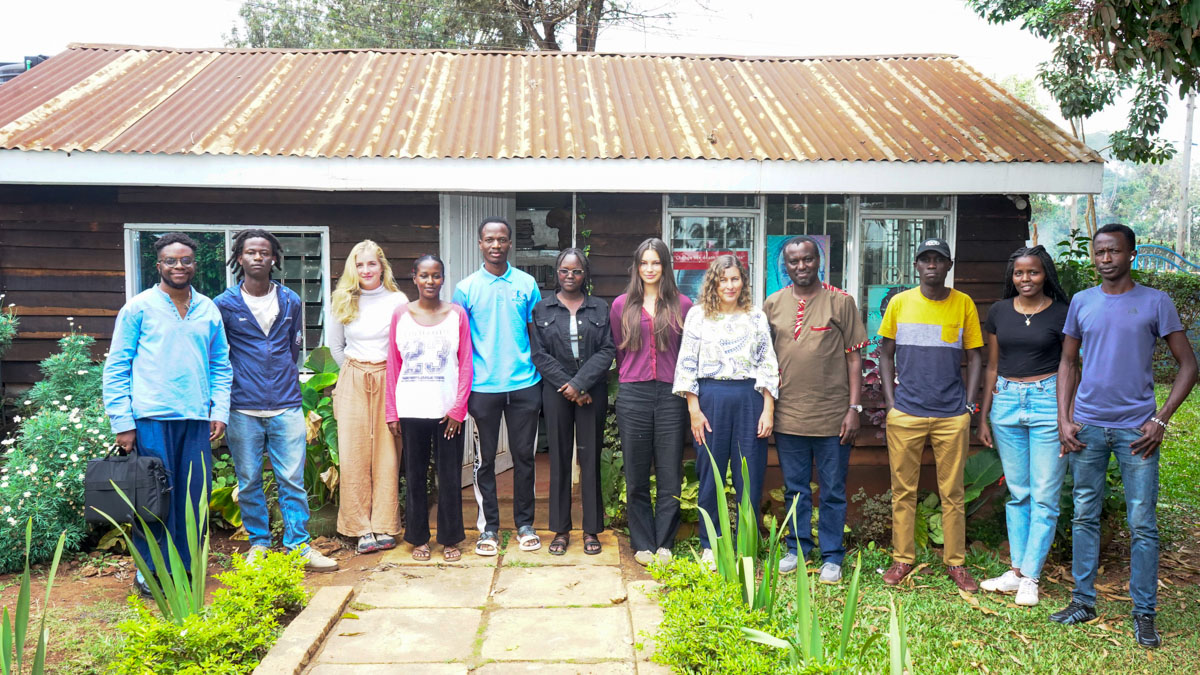
There are many reasons to become a member of the BIEA and join our research community. The BIEA membership is open to all researchers and early career researchers.
Get involved